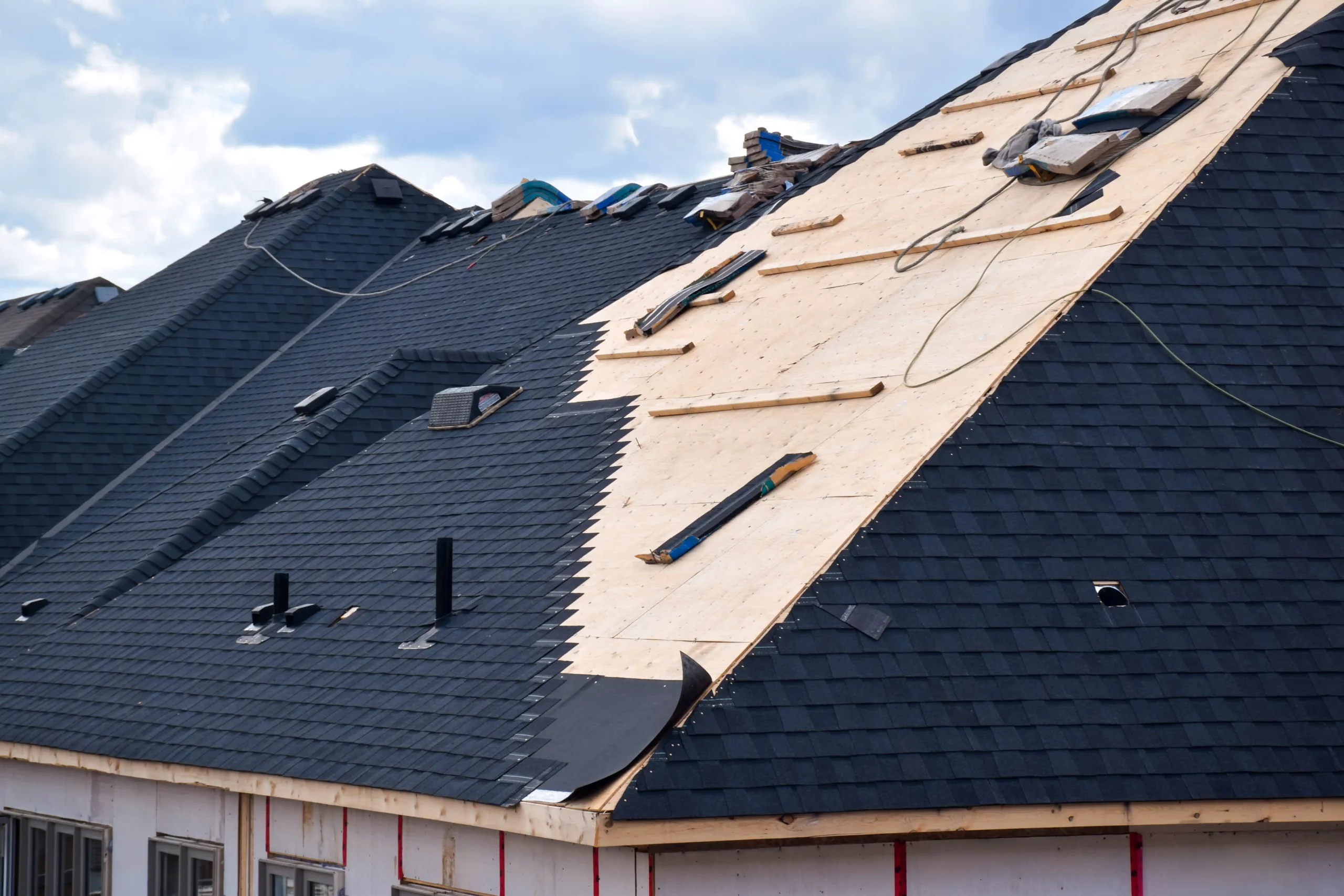
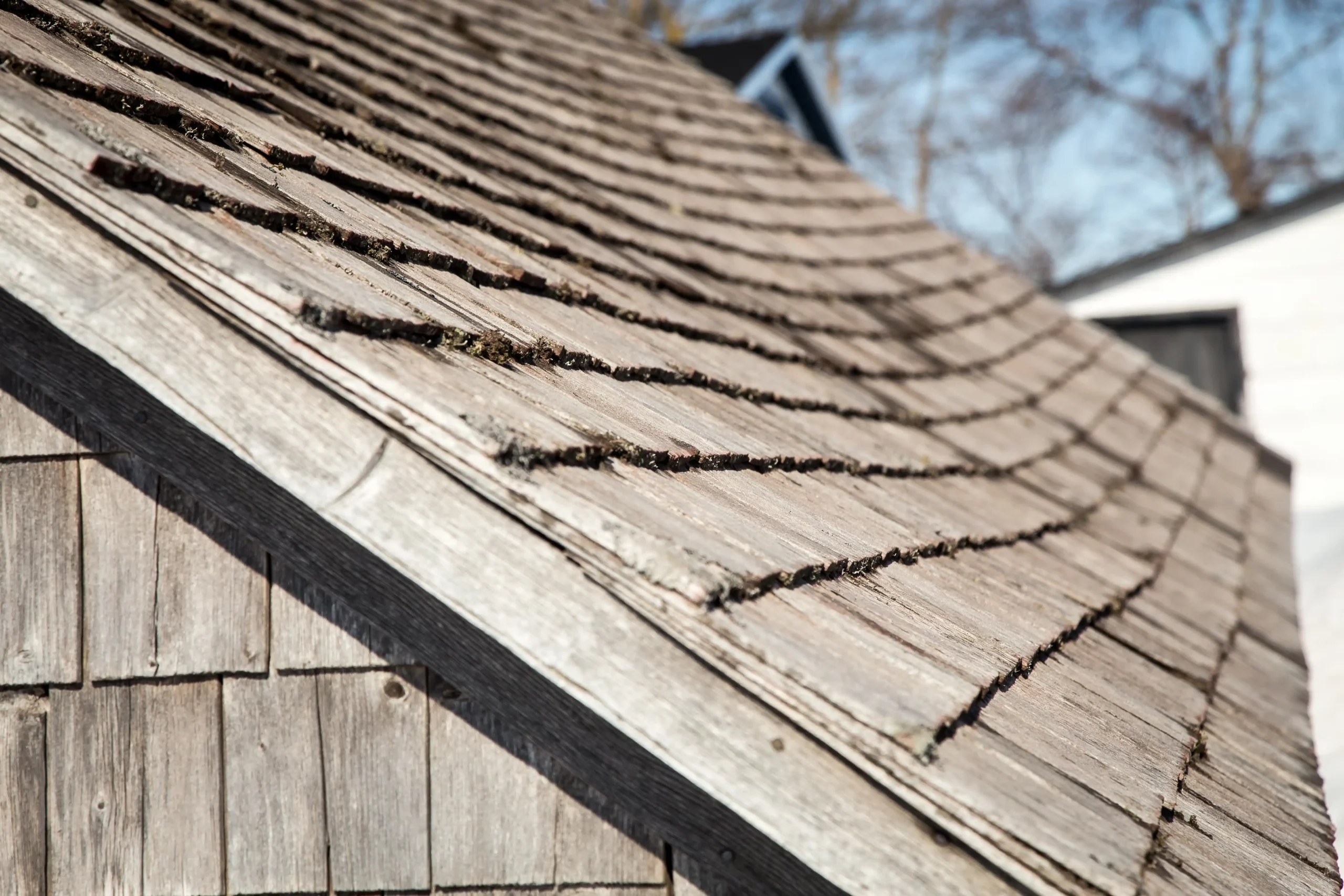
No roof can be made storm-proof, but routine maintenance and a condition-based evaluation can reduce avoidable vulnerabilities before Central Texas wind, hail, and heavy rain arrive. The goal is to identify loose, deteriorated, blocked, or poorly sealed components—not to promise that a roof will escape every storm without damage.
Start with safe observations from the ground
- Look for displaced, curled, cracked, or missing roof-covering materials.
- Check visible flashings, vents, pipe penetrations, and edge metal for looseness or damage.
- Clear gutters and downspouts when they can be reached safely and confirm water discharges away from the foundation.
- Trim hazardous branches through a qualified tree professional; do not work near power lines.
- Inside, note existing ceiling stains, damp insulation, musty odors, or daylight at roof openings.
Do not climb onto a wet, steep, or potentially damaged roof. Ground-level observations cannot confirm every roof condition, but they can help identify when closer evaluation is warranted.
Roof details that often deserve attention
Many leaks begin at transitions and penetrations rather than in the middle of an otherwise intact roof field. Valleys, sidewalls, chimneys, skylights, plumbing vents, exhaust vents, roof-to-wall connections, and low-slope drainage points should be evaluated for deterioration, displacement, open seams, failed sealants, or debris accumulation.
For low-slope roofs, confirm that drains, scuppers, and gutters are open. Persistent ponding may indicate drainage, slope, or structural issues and should be evaluated rather than covered with sealant.
Maintenance before a storm
- Repair known leaks and displaced materials instead of waiting for the next storm.
- Secure loose exterior items that could become windborne debris.
- Keep photographs and records of completed roof maintenance.
- Know how to shut off utilities and whom to contact if water entry creates an electrical hazard.
When a professional roof evaluation makes sense
There is no single inspection interval that fits every roof. Age, material, exposure, prior repairs, known leaks, manufacturer requirements, building use, and recent weather should guide the schedule. An evaluation is especially reasonable when there is active leakage, visible displacement, a significant recent event, a pending property transaction, or uncertainty about an older repair.
A useful evaluation should document locations and conditions, describe access limitations, and distinguish immediate repairs from routine maintenance and longer-term replacement planning. Ask for photographs and a written scope when work is recommended.
Understand material ratings and limitations
Impact-resistant shingles, tested assemblies, and properly detailed metal systems may offer advantages, but ratings apply to specific products and test methods. Performance also depends on the deck, underlayment, fastening, flashing, ventilation, workmanship, maintenance, and actual storm conditions. No product rating is a guarantee against all hail or wind damage.
Review insurance questions with the right party
Before storm season, ask your insurance company or agent about the roof information on your policy, deductibles, roof-payment basis, exclusions, and documentation requirements. A roofing contractor can evaluate roof conditions and prepare an estimate, but PinnacleView does not interpret policy coverage or act as a public insurance adjuster. The Texas Department of Insurance provides current consumer guidance.
Schedule a Central Texas roof evaluation
PinnacleView Roofing evaluates roof conditions and provides maintenance, repair, or replacement recommendations based on observed needs. Contact PinnacleView to schedule service in Belton, Temple, Salado, or surrounding Central Texas communities.